
Industry news
Scientific Value of Animal Skeletal Specimens
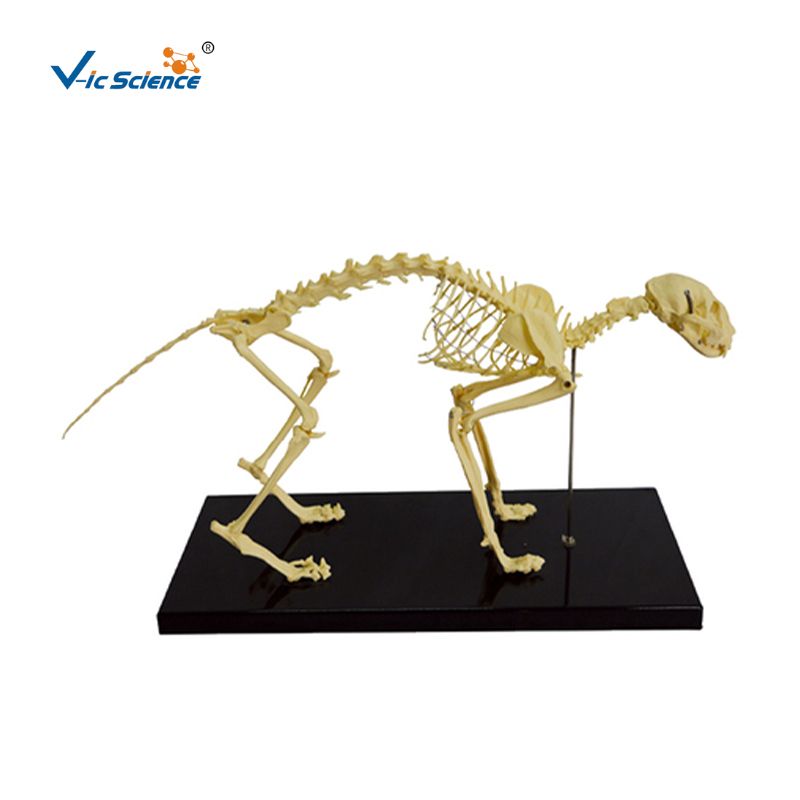
The value of animal skeletal specimens goes far beyond their ornamental function in science popularization exhibitions. They play an irreplaceable role in scientific research, education, archaeology, forensic medicine and other fields.
In evolutionary biology research, skeletal specimens are the **key evidence** for exploring species evolution. There are differences in the skeletal structures of different species, and these differences record the evolutionary trajectories of species adapting to the environment. For example, by comparing the skeletal specimens of modern birds with those of ancient dinosaurs, scientists have found many similarities between the wing bones of birds and the forelimb bones of dinosaurs, which provides strong support for the theory that **birds originated from dinosaurs**. In addition, by analyzing the fossil specimens of animal bones from different geological ages, scientists can also reconstruct the ancient ecological environment and understand the rise and fall of species.
In the field of education, skeletal specimens serve as intuitive **anatomical teaching aids**. For students majoring in biology and medicine, observing animal skeletal specimens enables them to quickly grasp knowledge such as animal skeletal structure, joint connection, and muscle attachment points, which is more intuitive and easier to understand than simply reading textbooks. For instance, in veterinary education, skeletal specimens of common animals like dogs and cats can help students familiarize themselves with animal skeletal anatomical structures, laying a solid foundation for subsequent clinical diagnosis and surgery.
Skeletal specimens also play an important role in archaeology and forensic medicine. By studying the skeletal specimens of ancient animals, archaeologists can understand the production and living methods of human beings at that time. For example, analyzing the bones of domestic animals can help judge the level of agricultural development in that period.
Nowadays, with the development of technology, the production and application of animal skeletal specimens are constantly innovating. For example, 3D scanning technology can accurately replicate precious skeletal specimens, which not only facilitates resource sharing among researchers but also avoids damage to the original specimens. In virtual museums, digital skeletal specimens allow audiences to observe skeletal structures 360 degrees through interactive operations, enhancing the science popularization experience.
A single animal skeletal specimen carries the history of life, embodies the craftsmanship of its maker, and unlocks the mysteries of nature.
TOP